
Delegation of Turkmenistan Participated in Regional Seminar on Drug Monitoring held in Almaty, Kazakhstan
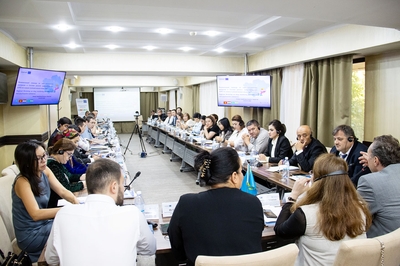
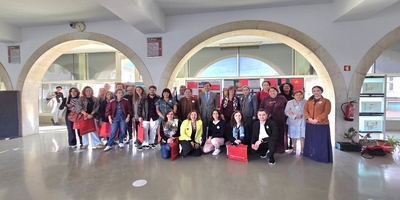
On July 24-25, 2024, a delegation from Turkmenistan participated in the Regional Seminar on Drug Monitoring, New Psychoactive Substances, and Early Warning Systems held in Almaty, Kazakhstan. The event was organized with the support of the Fundación Internacional y para Iberoamérica de Administración y Políticas Públicas (FIIAPP) as part of the 7th phase of the Central Asia Drug Action Programme (CADAP-7).
The seminar brought together representatives from beneficiary state institutions of Central Asian countries, EU delegations, and several European institutions and programs under the EU framework. During the seminar, representatives from Central Asian countries and experts from EU countries discussed issues related to drug monitoring, new psychoactive substances, and the development of early warning systems based on advanced European experience and international standards. The main goal of the event was to unite key stakeholders from government and non-governmental organizations and define a unified action plan to improve data collection and early warning systems.
CADAP, aimed at preventing the spread of drugs in Central Asia, is an initiative of the European Union. Since its launch in 2003, the program has supported the governments of Kazakhstan, Kyrgyzstan, Tajikistan, Turkmenistan, and Uzbekistan in implementing strategies and measures to reduce drug demand, promote preventive initiatives, and improve treatment for drug users.
Currently, the 7th phase of CADAP is being implemented, aligned with the EU Drug Strategy 2021-2025 and the Joint Communication "EU and Central Asia: New Opportunities for a Stronger Partnership." CADAP 7 reflects the EU's long-term commitment to supporting Central Asian partners in developing comprehensive and balanced drug policies. The program is also based on relevant UN conventions and the Universal Declaration of Human Rights.
1. Exchange of Experience and Knowledge: Representatives from Central Asian countries and EU experts shared experiences and knowledge on drug monitoring and new psychoactive substances. They presented advanced methods and standards used in Europe, which will help improve monitoring and early warning approaches in the region.
2. Discussion of International Standards: Participants discussed international standards and approaches to drug monitoring and early warning. Special attention was given to advanced European practices and their adaptation for Central Asia.
3. Development of a Unified Action Plan: A significant outcome of the seminar was the development of a unified action plan to improve data collection and early warning systems, including specific steps for integrating monitoring and information exchange between the region's countries.
4. Strengthening Cooperation: The seminar fostered cooperation between governmental and non-governmental institutions and international organizations. Participants agreed to continue dialogue and joint efforts to prevent the spread of drugs.
5. Support for Vulnerable Groups: Measures were discussed to improve access for vulnerable groups to quality drug demand reduction measures, including approaches based on gender aspects and human rights, aimed at creating a more inclusive and equitable support system.
6. Support from International Organizations: Participants noted the importance of support from international organizations, such as the EU and UN, in implementing the CADAP program and other drug prevention initiatives. International cooperation plays a key role in achieving the program's goals.
Turkmenistan recognizes the leading role of the UN as a guarantor of peace and security and promotes the expansion of dialogue on anti-drug issues. The work on preventing the spread of drugs in Turkmenistan is also based on the Law of Turkmenistan "On Narcotic Drugs, Psychotropic Substances, Precursors and Counteracting Their Illicit Trafficking" and other regulatory legal acts. Our country actively promotes international and regional cooperation in combating the illicit drug trade and participates in joint projects and programs implemented in Central Asia.
Turkmenistan views youth as a strategic resource of the country and places great importance on their social protection and the promotion of patriotism. As part of its youth policy, Turkmenistan has adopted a new version of the Law "On State Youth Policy" and approved the Strategy for International Youth Cooperation of Turkmenistan for 2023-2030.
Turkmenistan will continue to make efforts to prevent the spread of drugs, cooperating with the CADAP program and other specialized organizations. The state aims to completely eradicate the drug threat and build a drug-free world, strengthening international cooperation and ensuring sustainable development.
The seminar in Almaty was attended by a representative from the Ministry of Education of Turkmenistan, highlighting the importance of our country's participation in international initiatives and cooperation in the field of drug control. We express our sincere gratitude to Hero-Arkadag and the Esteemed President of Turkmenistan for their constant support in the development of education and science in our country. Thanks to their leadership and visionary approach, Turkmenistan is achieving significant success on the international stage.