
A TEXTBOOK “CRIMINAL LAW (SPECIAL PART)” PUBLISHED FOR HIGHER EDUCATIONAL INSTITUTIONS
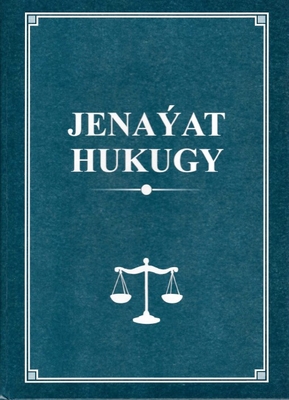
Criminal law is a branch of law that regulates public relations by protecting them from criminal offenses through the punishment of offenders and other measures of state coercion. It establishes the foundations of criminal liability, the procedure for its application or release, and the conditions for applying medical and educational coercive measures. Criminal law encompasses issues such as the concept of crime, its types, aggravating and mitigating circumstances, conditions that exclude criminal liability, and types of punishment.
The textbook “Criminal Law (Special Part)” has been published for higher educational institutions (authors: D. Amanmuhammedova, N. Khalymov, Turkmen State Publishing Service). It provides a detailed legal analysis of all articles of the Special Part of the Criminal Code of Turkmenistan, adopted in its revised version in 2010, taking into account amendments and additions up to 2017. This is the first textbook on the discipline “Criminal Law (Special Part)” written in the Turkmen language.
The textbook comprises twenty chapters, each divided into paragraphs and subsections. The chapters generally correspond to those of the Special Part of the Criminal Code of Turkmenistan. The first paragraph of each chapter provides an explanation of the crimes included in the chapter and classifies them into groups.
Studying the concepts and institutions of the Special Part of criminal law follows a specific logical structure that allows for a universal approach to analyzing all crime components. The textbook begins the analysis of each crime with its definition and then reveals its main characteristics. For example, in robbery, the analysis starts with the object of the crime, which is another person’s property. It then examines the victim and other elements of the crime.
After analyzing the objective elements of the crime, the subjective elements, such as the form and type of guilt, motive, and purpose, are examined. The analysis concludes with a description of the subject of the crime, including permanent and variable characteristics such as age, sanity, and special features. The next stage examines aggravating circumstances and differentiates the crime from similar offenses.
The textbook incorporates references to relevant decisions of the Plenum of the Supreme Court of Turkmenistan, enhancing its practical applicability. Additionally, the textbook includes a table summarizing all quantitative criteria specified in the Special Part of the Criminal Code and a comparative analysis of the old and new versions of the Code (2022 revision). This significantly increases the textbook’s value for students and educators.
Department of Textbook Preparation and Publishing,
Ministry of Education of Turkmenistan