
Turkmenistan and the United Kingdom Strengthen Cooperation in Education

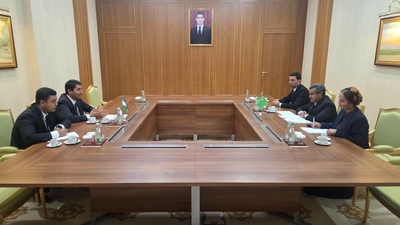
London, March 7. As part of the Turkmen-British Trade and Industrial Council (TUKTIC) meeting, representatives of the British academic community presented an initiative to expand educational cooperation with Turkmenistan. The focus was on integrating British educational programs, implementing modern teaching methodologies, and increasing opportunities for English language learning.
The British side acknowledged Turkmenistan’s significant progress in developing its education system and expressed its readiness to support its further integration into the international academic space. In particular, discussions were held on the possibility of implementing University of London programs in Turkmenistan, allowing students to earn internationally recognized degrees without having to leave their country.
Representatives of the University of London emphasized that key areas of cooperation could include programs in the most in-demand specializations. Under the guidance of leading University of London colleges, academic courses have been developed in the following fields:
•Computer Science (Goldsmiths, University of London) – training specialists for the digital economy.
•Business Administration (Royal Holloway, University of London) – preparing managers for the public and private sectors.
•Law (Queen Mary, University of London) – training international-level legal professionals.
•Marketing (Royal Holloway, University of London) – developing professional skills in the field of marketing.
•Finance and Accounting (London School of Economics and Political Science, LSE) – preparing professionals for the financial sector.
One of the key speakers at the meeting, Professor David Baker (University of London), presented the opportunities offered by the British Education Network (BEN) – a platform that connects leading British universities and provides access to modern educational technologies. BEN will enable students to study through University of London programs while remaining in their home country, significantly expanding their academic and career prospects.
The meeting also included a presentation of key University of London statistics, highlighting its status as one of the world’s largest educational institutions. The university currently has 210,000 students from 190 countries, with over 4 million graduates, including 40,000 professionals in law (LLB).
The University of London collaborates with over 100 international partners in more than 40 countries and applies a regular quality monitoring system (Recognition Framework) to ensure that partner institutions meet high British educational standards.
The British side also highlighted the following potential areas of cooperation:
•Support for English language teaching, including the organization of IELTS and TOEFL certification exams in Turkmenistan.
•Development of academic mobility, offering new opportunities for students and faculty exchanges.
•Implementation of flexible learning formats, including online courses and blended learning programs.
At the conclusion of the meeting, both sides expressed mutual interest in expanding educational cooperation. British representatives emphasized that the implementation of University of London programs in Turkmenistan will be an important step towards developing a modern, competitive higher education system. Further negotiations are planned in the near future to establish concrete mechanisms for implementing these initiatives.
Also read: Turkmenportal