
Foundation for the Future: Monitoring and Development Strategy of Higher Education Until 2052
The Ministry of Education of Turkmenistan has completed the fourth annual monitoring of the performance of higher education institutions. The monitoring covered key aspects of university activities: implementation of plans related to academic, methodological, scientific, and educational work; graduate employment rates; scientific activity; quality of professional development of teaching staff; as well as other indicators based on scientometrics, educational metrics, and pedagogical measurements.
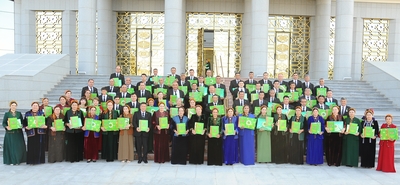
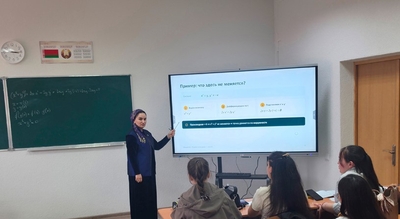
A series of annual working meetings, held since 2022, has concluded. Following established tradition, the meetings were attended by relevant officials of the Ministry of Education and vice-rectors of higher education institutions responsible for scientific and academic affairs. The meetings focused on summarizing the results of the latest phase of the monitoring, covering the current academic year. The evaluation also included compliance with existing regulatory requirements and the level of digital systems implementation.
This monitoring, conducted for the fourth consecutive year, represents a systematic, multi-level process of assessing the quality of higher education, based on international standards (including ESG — Standards and Guidelines for Quality Assurance in the European Higher Education Area) and UNESCO approaches.

A distinguishing feature of this monitoring is its scientific validity — methods such as paired correlation analysis, clustering, and longitudinal data comparison were used. This approach not only revealed the current state of universities but also tracked their development dynamics over the past four years.
During the meetings with the participation of heads of relevant departments and university vice-rectors, the obtained results were thoroughly reviewed. Participants unanimously acknowledged the monitoring as an effective tool for systemic analysis, an evidence-based foundation for decision-making and strategic planning. All participants supported the inclusion of the recommendations, based on the analysis of the current and previous three years, into the structure of strategic planning for the development of higher education institutions.

An important focus was the comparison of correlation analysis results with data from the university ranking system. The national university ranking system, introduced in 2022, covers all levels — from evaluating the performance of individual academic staff to departments, faculties, and universities as a whole. The ranking system is a multi-level assessment tool that allows for objective measurement of the performance of both individual units and institutions on a national scale.
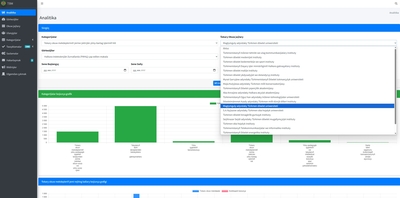
The key tool for conducting assessments within the national ranking system has, since 2022, been a digital analytical platform operating in real time. It covers all ranking levels across more than 50 key quality indicators of academic staff, departments, faculties, and universities overall.

The scientometric and educational metrics underlying this system have been adapted to reflect international best practices, including indicators used in global university rankings such as Times Higher Education, QS World University Rankings, and the Shanghai Ranking (ARWU). This has enabled the development of a national evaluation system that aligns with international standards while taking into account the national educational context.
The digital platform enables:
• tracking university performance across more than 50 quality indicators;
• analyzing, in real time, the effectiveness of each faculty member, department, faculty, and institution;
• visualizing and comparing key data for management decision-making;
• promptly identifying strengths and weaknesses in each institution’s performance;
• focusing on priority areas for each university.
The digital platform has become a powerful mechanism for stimulating scientific, educational, and human resource activity, achieving:
• a 95-fold increase in publications in internationally indexed scientific journals compared to 2019;
• strengthened links with employers and sectoral organizations;
• alignment of educational and research workloads with actual labor market and economic demands.
The results of the monitoring and the corresponding recommendations serve as the foundation for:
• strategic decisions regarding the development of higher education institutions;
• updating academic programs;
• improving human resources policies;
• developing a system for assessing and rewarding university performance.

Participants of the meetings highlighted the importance of this comprehensive monitoring for strategic planning and noted its significance in forming an evidence base for informed decision-making regarding the modernization of the higher education system.
It is particularly important to emphasize that the results of the multi-year monitoring and the data from the analytical platform form the foundation of the Higher Education Development Strategy of Turkmenistan for 2026–2052, currently being developed under the instruction of the esteemed National Leader of the Turkmen People, Chairman of the Halk Maslahaty of Turkmenistan, Hero-Arkadag.
Thus, the work on developing the Higher Education Development Strategy of Turkmenistan for 2026–2052 is being carried out systematically, based on a scientifically grounded and strategically sound process. It relies on years of monitoring, digital analytics, international quality standards, and a detailed analysis of how universities meet the real challenges of the time. This approach forms the foundation for building a highly effective, human capital-oriented higher education model that meets the goals of the country’s socio-economic development.
Ministry of Education of Turkmenistan