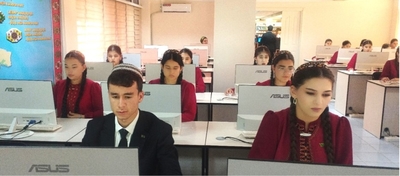

Students participated in the Central Asian Case Championship, held as part of the international "16 Days of Activism Against Gender Violence" campaign.

University student Aysoltan Esenova participated in the Central Asian Case Championship held in Astana. The event was part of the international "16 Days of Activism Against Gender Violence" campaign and brought together young people from different Central Asian countries for two days of learning, creativity, and solution-finding.
Day 1 Focus: New Ideas, Inspiration, and Relationship Development
The program opened with a speech by Mr. Sukhrob Khodzhimatov, Deputy Resident Representative of the UNDP in Kazakhstan. Following the address, participants engaged in group activities and attended an introductory lecture by Dr. Khalida Azhigulova, which focused on the root causes of digital gender violence.
This was followed by parallel classroom training sessions: one focused on analytical and critical thinking led by AIFC representative Ayan Tuleshev, and the other a master class on storytelling and visualization conducted by TOCHKA agency manager Galiya Idoyatova.
In the evening, training sessions were held on cyber hygiene with Guldana Zhumataj, a representative of KAZDREAM Holding, and on the practical application of artificial intelligence with journalist Anelia Öserkhan.
The day concluded with two main events: the teams first refined their presentations with specialized advice from experts across UN agencies (UNDP, UNFPA, UNICEF, UN Women, and WHO), and then attended a gala dinner with UN representatives and partners.
Day 2: Regional cooperation and creative solutions
On the second day, groups from all Central Asian countries discussed the real-world issue of sexual harassment. The group that Talib participated in developed an artificial intelligence-based chatbot designed to support victims of digital discrimination. The bot provides tailored guidance and assists in identifying perpetrators by facilitating connections with psychologists, lawyers, and law enforcement agencies. Additionally, the championship led to the development of a draft code of ethics that can be utilized in secondary and higher education institutions.
The team was made up of a diverse group of students, including those specializing in engineering and IT, law (PhD), MBA, and journalism. Such a multi-faceted collaboration allowed for the emergence of a truly comprehensive and innovative solution.
The case championship has become not only a platform for regional cooperation but also a space for young people to develop practical solutions aimed at creating a safer and more inclusive digital environment.