
of the Innovation Information Center
of the Ministry of Education of Turkmenistan
of the Innovation Information Center
of the Ministry of Education of Turkmenistan
Independent Neutral Turkmenistan - the
homeland of purposeful winged horses



News
Meeting of the Council of Directors of Vocational and Technical Educational Institutions
169
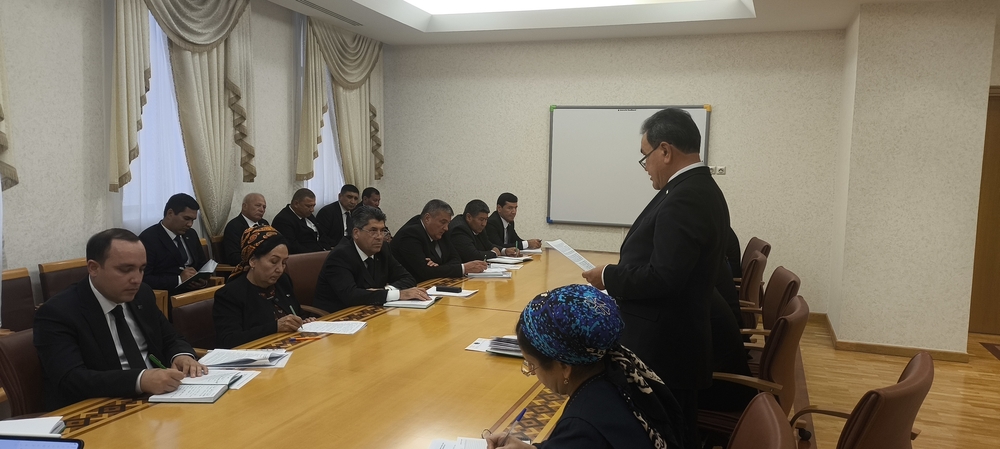
The Ministry of Education of Turkmenistan hosted a meeting of the Council of Directors of Vocational and Technical Educational Institutions, focusing on the improvement of the vocational and technical education system in the country. The event was held in accordance with the directives of the esteemed President of Turkmenistan, Serdar Berdimuhamedov, aimed at enhancing the education system, and the resolutions adopted during the session of the Halk Maslahaty of Turkmenistan.
During the Halk Maslahaty session, President Serdar Berdimuhamedov emphasized that the rapid development of science and technology, as well as the emergence of new technologies, necessitate the improvement of teaching methods in educational institutions. In his speech, the National Leader of the Turkmen people, Chairman of the Halk Maslahaty of Turkmenistan, Hero Arkadag, highlighted that the new era requires the expansion of ongoing reforms and the enhancement of the educational potential of society. In this context, it was proposed to hold meetings by the end of the year focused on the development of science, education, culture, and state youth policy.
At the meeting, participants were introduced to modern methodologies developed within the DARYA project (Dialogue and Action for Youth in Central Asia). This regional project, implemented in collaboration with the European Training Foundation, aims to develop skills relevant to the labor market, including digital and entrepreneurial competencies, and to establish regional qualification frameworks. Turkmenistan’s participation in DARYA fosters the implementation of flexible educational models and expands employment opportunities for youth, reflecting the country's commitment to the innovative development of vocational education.
The meeting also emphasized the importance of adopting professional standards and national qualification frameworks (NQF) based on advanced international experience to enhance the quality of training and align it with labor market requirements. These tools help harmonize qualifications, facilitate transitions between education levels, and promote the recognition of skills at the international level.
Participants noted the importance of cooperation with the Ministry of Labor and Social Protection of Turkmenistan, which is the authorized body for the development, implementation, and coordination of professional standards and qualification frameworks. The ministry also ensures that standards are updated in line with the evolving needs of the economy.
The meeting included an analysis of international experience, particularly the effectiveness of sectoral councils as a unifying link between the education system and industrial enterprises. These councils align educational programs with labor market needs, ensuring high-quality training and successful employment of graduates.
The positive experience of dual education was also reviewed, which involves a combined approach where students integrate theoretical studies at educational institutions with practical training at enterprises. This format promotes better preparation of specialists, bridges the gap between theory and practice, and improves employment outcomes.
Strengthening cooperation between vocational schools and higher education institutions was identified as a key area of discussion. The participants explored opportunities and mechanisms for developing joint educational programs to ensure continuity across educational stages. Additionally, they discussed creating academic pathways for in-depth study of related disciplines.
A significant element of system improvement is the development of a competency certification system for students, aligned with international standards. The participants supported the proposal to establish a cumulative qualification system, which will provide flexibility in transitioning between different educational levels.
In conclusion, it was proposed to form working groups to thoroughly develop the suggested initiatives. The Ministry of Education of Turkmenistan reaffirmed its commitment to enhancing the quality of workforce training essential for the innovative development of the country. Effective collaboration between educational institutions and businesses will foster the professional growth of young people and ensure sustainable socio-economic development in Turkmenistan.
Ministry of Education of Turkmenistan