
of the Innovation Information Center
of the Ministry of Education of Turkmenistan
of the Innovation Information Center
of the Ministry of Education of Turkmenistan
Independent Neutral Turkmenistan - the
homeland of purposeful winged horses



News
International training seminar held in Turkmenistan within the framework of the esasmus+ projest
437
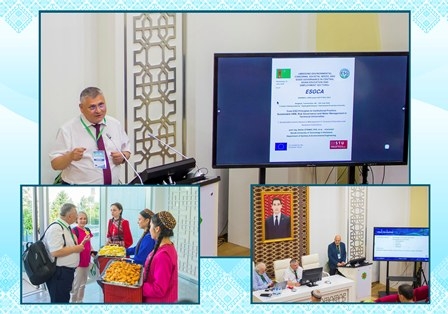
In the context of the growing internationalization of higher education and the increasing importance of sustainable development worldwide, universities are expected not only to provide high-quality academic education but also to contribute to environmental protection, social responsibility, and effective governance. Responding to these global challenges, the Erasmus+ Capacity Building in Higher Education (CBHE) project “ESGCA – Bridging Environmental Concerns, Societal Needs and Good Governance in Central Asian Education and Employment Sectors” has been actively promoting the integration of Environmental, Social and Governance (ESG) principles into higher education systems across Central Asia.
As part of the project implementation, an In-home Training of Trainers (ToT) seminar was organized in Turkmenistan from 8 to 12 June 2026. The event was jointly hosted by the International Oil and Gas University named after Yagshygeldi Kakayev and the State Energy Institute of Turkmenistan. The training brought together academic staff, researchers, specialists, project coordinators and international experts from partner universities in Italy and Slovakia.
The ESGCA project is funded by the European Union through the Erasmus+ Programme and coordinated by the University of Genoa, Italy. The project aims to modernize higher education systems in Central Asian countries through the introduction of ESG-related educational programmes, innovative teaching approaches and stronger cooperation between universities, businesses and public institutions.
Today, ESG principles have become a fundamental component of sustainable development strategies worldwide. Environmental sustainability, social responsibility and transparent governance are increasingly influencing the way organizations operate, including higher education institutions. Universities are expected to prepare graduates who possess not only professional expertise but also the ability to address environmental and social challenges while contributing to responsible decision-making processes.
Within the ESGCA framework, a series of international training activities have been conducted since the beginning of the project. During 2025 and early 2026, academic and managerial staff from Central Asian universities participated in training programmes organized in Bratislava, Genoa and Sibiu. These activities focused on leadership, sustainability management, organizational development, problem-solving skills and modern governance practices.
Subsequently, additional seminars were organized in Astana, Bukhara and Dushanbe, where participants received specialized training on ESG environmental aspects, social responsibility, human resource management, governance systems and risk management. The knowledge and experience gained during these international events created a strong foundation for the national-level training seminars conducted in partner countries.
The Turkmenistan In-home Training Seminar officially commenced on 8 June 2026 at the International Oil and Gas University named after Yagshygeldi Kakayev in Ashgabat. The opening ceremony brought together university leadership, project coordinators, academic staff and international partners participating both in person and online.
Welcoming remarks were delivered by Professor Bayrammyrat Atamanov, Rector of the International Oil and Gas University. In his speech, he emphasized the importance of international educational cooperation and highlighted the role of ESG principles in shaping the future of higher education and professional training. The participants were also introduced to the achievements and future objectives of the ESGCA project by Professor Maksat Churiyev, the local project coordinator.
Representatives of the University of Genoa and other project partners joined the opening ceremony through online platforms. They underlined the significance of collaboration between European and Central Asian universities and stressed the importance of preparing highly qualified specialists capable of addressing contemporary environmental, social and governance challenges.
The first day of training focused on introducing participants to ESG concepts and the overall objectives of the project. Trainers from the International Oil and Gas University delivered presentations covering environmental sustainability, social responsibility, governance principles and risk management. Discussions highlighted the growing role of universities in promoting sustainable development and responsible citizenship.
The second day of the seminar featured training sessions conducted by representatives of the University of Genoa. The programme began with a presentation of the ESGCA project by Mr. Angelo Musaio, Head of the International Cooperation Office and project coordinator from the University of Genoa. He provided a comprehensive overview of project activities, achievements and expected outcomes.
Later, Professor Agostino Massa delivered a lecture entitled “The Social Pillar of ESG: Recruitment, Management and Well-being of Human Resources in Public Administration.” During the session, participants explored modern approaches to human resource management, employee development, workplace well-being and social responsibility within public institutions. The lecture generated considerable interest due to its practical relevance and real-life examples from European public administration systems.
In the afternoon, Professor Giovanni Adorni conducted a session on “Artificial Intelligence Literacy and Human-Centered Digital Pedagogies for ESG Higher Education.” The presentation focused on the transformative impact of artificial intelligence on education, digital learning methodologies and innovative approaches to teaching and learning. Participants learned about emerging AI tools and discussed their potential applications in higher education institutions.
The third day continued with another session led by Professor Giovanni Adorni, who introduced participants to Prompt-Based Learning methodologies. The training provided practical guidance on interacting effectively with artificial intelligence systems, developing educational content, analyzing information and enhancing learning experiences through AI-assisted technologies.
During the afternoon session, Professor Stefan Stanko, Vice-Rector of the Slovak University of Technology in Bratislava, delivered a lecture entitled “From ESG Principles to Institutional Practice: Sustainable Human Resource Management, Risk Governance and Water Management in Technical Universities.” Drawing upon European experiences, he demonstrated how ESG principles can be integrated into institutional policies and daily operations of higher education institutions.
The lecture emphasized the importance of sustainable management systems, environmental responsibility, efficient resource utilization and risk assessment procedures. Participants engaged in active discussions regarding the challenges and opportunities associated with implementing ESG practices within their own institutions.
On 11 June, the international delegation travelled to Mary, where the training programme continued at the State Energy Institute of Turkmenistan. The event provided an opportunity for participants to become familiar with the institute’s educational programmes, scientific activities and initiatives related to sustainable development.
Representatives of the State Energy Institute presented their experiences in incorporating ESG principles into educational and research activities. Topics included environmental protection, social engagement, sustainable energy development and risk management. The sessions encouraged knowledge sharing and fostered collaboration between academic institutions from different regions of the country.
The Mary segment of the programme also demonstrated the project’s commitment to ensuring broad participation and regional outreach. Academic staff based in Ashgabat joined the activities online, allowing a larger audience to benefit from the training and discussions.
The final day of the seminar took place on 12 June in Ashgabat. The programme included the continuation of Professor Stefan Stanko’s lectures as well as practical workshops focused on international best practices in ESG implementation. Participants worked in groups, exchanged experiences and developed recommendations for integrating ESG principles into educational programmes and institutional strategies.
One of the most important themes discussed during the final sessions was the development of future Master’s degree programmes in ESG. These programmes represent a key outcome of the ESGCA project and are expected to provide students with interdisciplinary knowledge covering environmental sustainability, social responsibility, governance systems and sustainable economic development.
Participants also discussed the establishment of ESG Centers within partner universities. These centers are expected to serve as platforms for education, research, stakeholder engagement and dissemination of ESG-related knowledge. Considerable attention was given to organizational structures, infrastructure requirements and long-term sustainability of these initiatives.
Throughout the five-day programme, participants gained valuable knowledge about ESG frameworks, innovative teaching methodologies, digital transformation, artificial intelligence applications and international educational practices. The seminar created an effective environment for professional development, networking and academic exchange.
At the closing ceremony, international certificates were awarded to academic staff and specialists from the International Oil and Gas University named after Yagshygeldi Kakayev and the State Energy Institute of Turkmenistan who successfully completed the training programme. The ceremony symbolized the successful completion of an intensive week of learning, cooperation and professional growth.
Following the official programme, the international guests participated in a cultural tour of Ashgabat. They visited major landmarks of the Turkmen capital and gained a deeper understanding of the country’s cultural heritage, modern urban development and national traditions. Such activities further strengthened mutual understanding and friendship between the participating institutions and countries.
The In-home Training Seminar conducted within the ESGCA project marked an important milestone in the implementation of Erasmus+ initiatives in Turkmenistan. The event contributed significantly to capacity building, international academic cooperation and the promotion of ESG principles within higher education. The knowledge and experience gained during the seminar will support the development of innovative educational programmes and help prepare future professionals capable of addressing the challenges of sustainable development in an increasingly interconnected world.