

TURKMENISTAN IS PLANNING THE LAUNCH OF THE SECOND NATIONAL COMMUNICATION SATELLITE
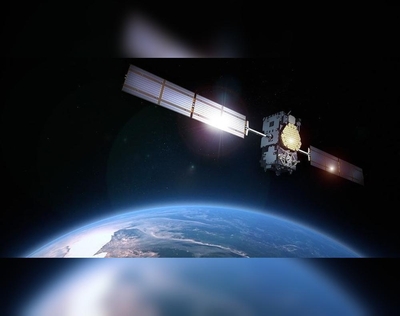
Turkmenistan plans to launch a second space communications satellite to improve the quality of telecommunications services. This was reported on the website of the Agency of Transport and Communications under the Cabinet of Ministers of Turkmenistan.
The delegation of Turkmenistan took part in the meeting of ministers of landlocked developing countries, which took place in Yerevan (Armenia). The forum brought together delegations from more than 30 countries and representatives of international organizations. Turkmenistan is represented by the Agency of Transport and Communications under the Cabinet of Ministers of the country.
Ministers and other high-level participants shared their national and regional experiences on progress, challenges and opportunities in improving transport connectivity, as well as recommendations for improved transport connectivity and an agenda for landlocked developing countries.
Deputy Director General of the Agency Batyr Annaev spoke at a session dedicated to the transformation of global trade and connections through the use of digital technologies.
“Further steps of Turkmenistan include strengthening the innovative and technological, transport and logistics infrastructure, integration of banking solutions, and the launch of a second national communications satellite to improve the quality of telecommunications services.
It is also planned to activate free economic zones and create industrial clusters to stimulate diversity in the economic structure, and significantly increase investments in research and development projects,” Batyr Annaev said in his speech.
According to Daryo, the French-Italian Thales Alenia Space is offering its services for the construction of the new satellite. This company built TürkmenÄlem 52oE, the first national satellite, which was launched in 2015 from Cape Canaveral, Florida, USA.
The space probe is also expected to provide environmental monitoring of oil fields, pipeline corridors and refineries. Satellite imaging will also increase the efficiency of monitoring the progress of construction of transport infrastructure and the environmental condition of not only the earth, but also the shelf of the Caspian Sea.